>
The new campaign by Sony PlayStation… I like it a lot 😉
Posted in Digital | No Comments »
>This weekend I will be finishing my book ‘A Brand New Playground’… finally – a year of hard work comes to an end… 😉
The book will be released during the ‘Games for Brands’ convention in London on the 27th of October.

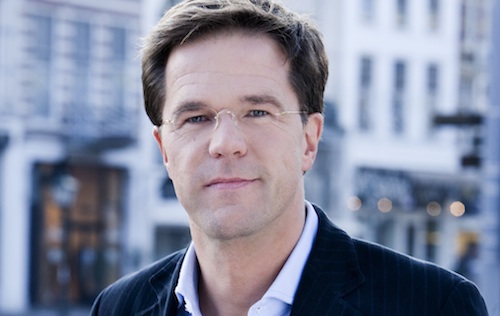
Also I will be handing out the Dutch version of my book (‘Laat met je merk spelen’) during the High Tea with our Prime Minister Mark Rutte in London in November 2011! How cool is that!?
Please feel free to download and spread the free summary of ‘A Brand New Playground’, which you can download HERE and let me know what you think.
I will make the full book available starting November 1st 2011 – so be sure to check out my post about that end of October!

Posted in Digital | No Comments »
>
An interesting example of a real classic ‘business game’ to serve the three P’s: People, Planet & Profit for (in this case) TNT. Employees where challenged to think of creative solutions to help TNT expand without harming the planet.
Posted in Digital | No Comments »
>Thanks to my dear friend Lessie Hampton a great overview of the evolution of internet comparing the current (2011) with 1993…

Created by: Online University target=”_blank”
Posted in Digital | No Comments »
>
Lana del Rey understands why I need to play video games even though loving my fellow humans 😉
Posted in Digital | No Comments »
>
 University researchers and occupational therapists across the nation are utilizing mobile game technology, made popular by widespread play on smartphones and tablets, as a critical therapeutic tool. These professionals are seeing real benefits in the use of touchscreen games for those with both physical and mental disabilities, including children with autism and cerebral palsy.
Posted in Digital | No Comments »
> Just a quick note to report to my dear and well respected readers that I will start blogging soon! I’m currently in Singapore, but I’ll be back in Holland tomorrow! For members of IAA in The Netherlands – please join me Thursday evening in Amsterdam for the event about using games as a marketing tool, it’s in Macy’s.
For English readers – please join me in October in London on the ‘Games for Brands’ event (Please check my previous post about that) – I will be launching the English version of my book there (and it will be free throughout the rest of the year online as a pdf).
And for my Russian readers… I will most likely be speaking in Moskow in November. Nostrovya!
Also I am moving office (and home) to Amsterdam starting this week until the first of October, so don’t think I’m not busy! 😉 I’m just not busy blogging, but I will be again soon I promise: new cases, new data on gamers, mobile, social etc.
Send me any requests you have on Twitter @BartHufen or #Gamification
Posted in Digital | No Comments »
>
Unity Spring 2010 Highlight Reel from Unity3D on Vimeo.

Then Playdom – one of the bigger publishers of casual (and social) games, showed that to make an internationally profitable game, you need at least an audience of 15 mln people, since on average only 1% is likely to play the game and only 1% of that percentage will buy ingame content regularly, hence making your free-game profitable.
1% of 15 mln = 150.000 people
1% buys a lot of ingame stuff, say €40,- per year = €600.000,-
9% buys some stuff to experiment, say €10,- per year = €141.000,-
Which is a total sum of €741.000, which basically means you can have a development team of up to 7-10 people (an average team for a social game and 1 year production).
They showed some key-facts on Facebook and other Social Media users.
In China, about 200 mln people have subscribed to Qzone, the largest Chinese social network.
There are 111 mln Spanish speaking people on Facebook
Local Russian social networks account for 34 million people.
Some other countries:
France: 33 mln
Germany: 21 mln
Dutch speaking (Netherland, Belgium, Dutch Antilles): 4,6 mln
Italian: 19 mln
Arabic: 16 mln
The main purpose of a social game should be to keep your players happy, don’t frustrate them and don’t challenge them too much (according to Playdom). They expect to be rewarded for their efforts and actually managing expectations is probably the most important part in developing a social game. Below some more facts about the German game market, as you can see – 23 mln play games and almost 50% are women…
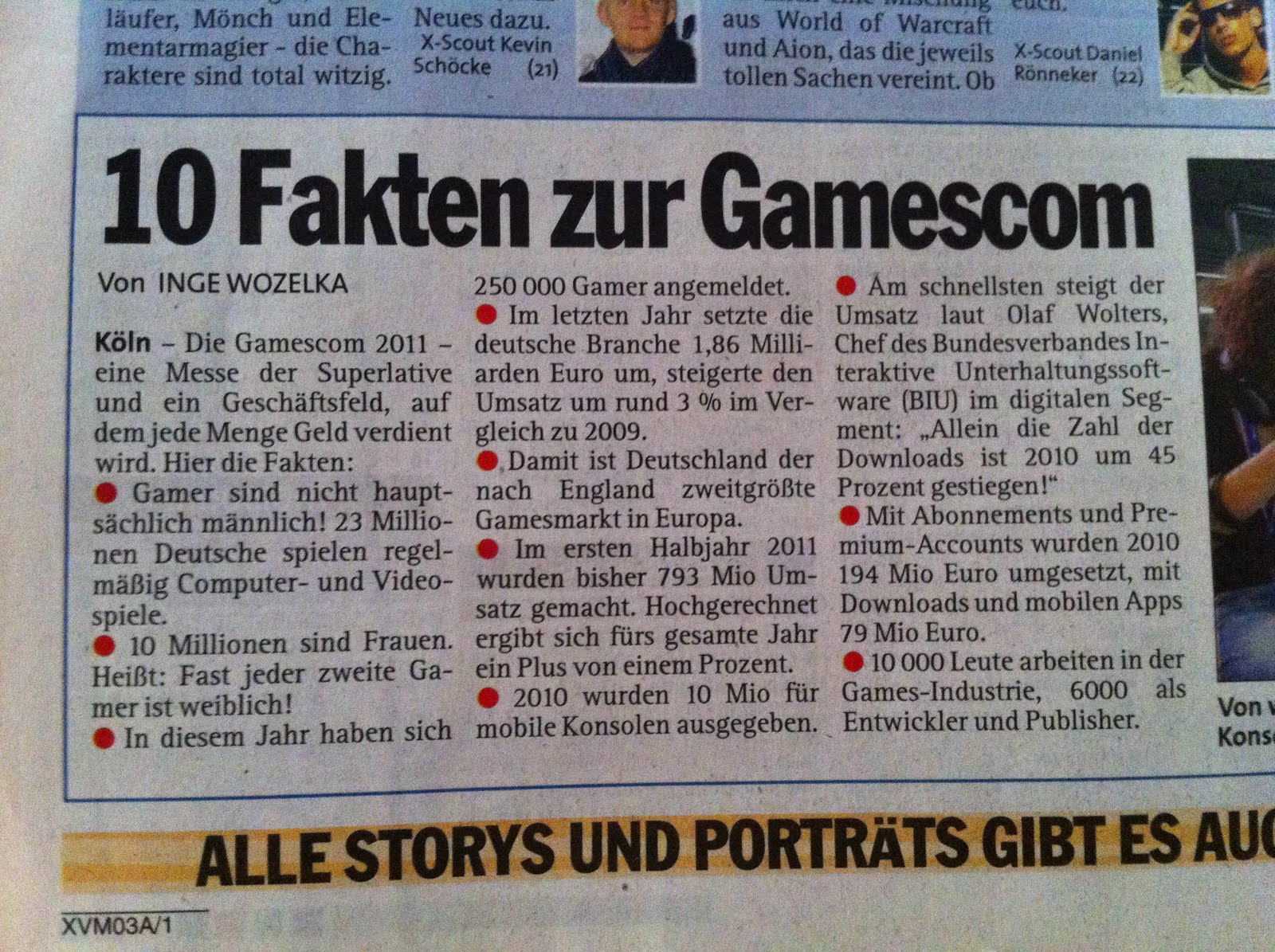
Looking forward to tomorrow when the Gamescom kicks off, it’s comparable to the E3 (Electronic Entertainment Expo) for Europe!

target=”_blank”
Posted in Digital | No Comments »
> The upcoming three days I will be smelling a lot of techy programmers I’m afraid at the Game Developer Conference in Koln Germany.
Wish me luck!
Posted in Digital | 1 Comment »
Dutch Game Garden 02
Arendstraat 27
1223RE Hilversum
T: +31(0)687002363
barthufen at brandnewgame.nl
follow me on:


