AI Transformation game

From AI Ambition to AI Behavior

Most AI projects fail for one simple reason. Organizations focus on technology. People determine success.
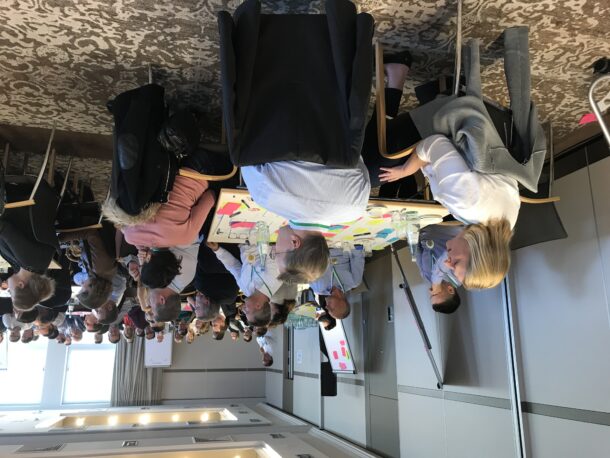
The AI Transformation Game combines GameStorm, process optimization, behavioral design and Generative AI adoption into one practical transformation program. Instead of teaching employees how AI works, we help them discover how AI helps them in their daily work for their personal (and professional) goals.
Teams learn to:
  • Identify AI opportunities in their weekly routine
  • Map business processes that fuel succes and the organizational purpose
  • Build use cases to test their prototypes
  • Experiment with Microsoft Copilot to build the prototype
  • Share successful prompts and agents with colleagues through a repository
  • Improve workflows and sharing success
  • Measure productivity gains through SMART KPI’s tracked and displayed by a Power BI dashboard
Using game mechanics, employees earn recognition for experimentation, collaboration and continuous improvement.
The result is higher engagement, faster adoption and stronger business outcomes.
The AI Transformation Game can be delivered as:
  • Just one inspiration session
  • GameStorm workshop
  • AI Hackathon where we create working prototypes to later integrate in your systems
  • Multi-week adoption program (10 personalized gen-ai quests for each participant of the GameStorm)
  • Organization-wide transformation initiative (a 3 month program)
BrandNewGame and AI Advies & Training combined we offer a network of 40+ experienced facilitators, trainers and AI specialists who help organizations turn AI investments into real business results.
Because AI does not transform organizations.
People do.
Outcome: Higher AI adoption, increased productivity and a culture of continuous improvement.

Manage only the key-processes (20-80)

Most organizations contain and try to manage hundreds of processes divided over multiple – badly aligned – business units and/ or departments.

Only a handful truly determine their success.
Since 2009 we have helped organizations improve business processes using serious games, gamification and behavioral change, and since 2023 supported by gen-ai and smart software integrations thanks to the possibilities that generative AI, Microsoft Copilot and AI Hackathons provide us.
Our approach starts with a simple question:
Which process creates the biggest impact on the business, for instance – which 20% impacts 80% of your revenues or costs on the business playground.
During this short session, we identify the critical activities that influence (for instance):
  • Productivity
  • Customer satisfaction
  • Revenue
  • Costs
  • Quality
  • Employee engagement
Very often we discover that one or two key processes consume a large percentage of organizational effort while influencing the majority of the business outcome. Once identified, we map the process, analyze bottlenecks and explore opportunities for improvement.
This may involve:
  • Process redesign
  • Automation (we built a great automated offer pipeline for a client by connecting email, an administrative software program and sharepoint)
  • AI support
  • Copilot implementation (making sure people start using it, with 100% personalized mini-quests per employee to make the use cases relevant)
  • Knowledge sharing sessions
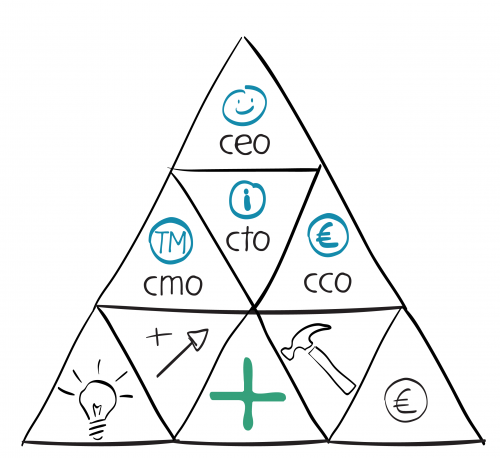
  • Improved collaboration by defining their contribution to the purpose pyramid (see previous posts)
  • New routines and behaviors
Unlike traditional consultancy projects, we focus heavily on adoption.
Because improving a process is easy. Changing behavior is hard – lucky for you, we are experts in this field šŸ˜‰
By combining gamification, workshops and AI-powered experimentation, we help teams build sustainable improvements that continue long after the project finishes.
Outcome: Faster processes, lower costs, improved quality and measurable business impact.

Purpose Pyramid Workshop

Turn Ambition Into Measurable Action

Every organization wants growth.
Every organization wants innovation.
Every organization wants employees to take ownership.
Yet many organizations struggle to connect strategic goals with everyday behavior. Lucky for you:Ā We know how to create cultures of collaboration.
The Purpose Pyramid Workshop bridges that gap.
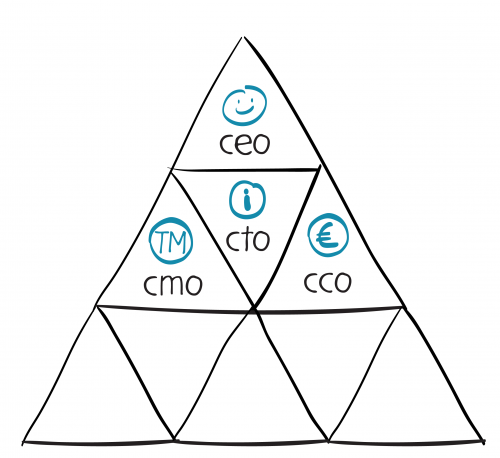
Together we build a three-level purpose framework that aligns the executive team, management and operational employees around a shared direction.
We start at the top. The board or managing directors define the organization’s highest purpose.
Examples include:
  • Creating sustainable growth
  • Improving customer experience
  • Becoming AI-enabled
  • Increasing productivity
  • Reducing waste
  • Creating social impact
From there we translate that purpose into practical objectives for management teams, that they can manage and measure with the right motivating mechanics and SMART KPI’s. Finally, we work with operational employees to co-define the concrete actions that bring the purpose visibly to life through motivating and measurable goals.
The result is complete vertical alignment and a culture of collaboration.
Everybody understands:
  • Why we exist.
  • What we want to achieve.
  • What role they play.
  • Which actions contribute most.
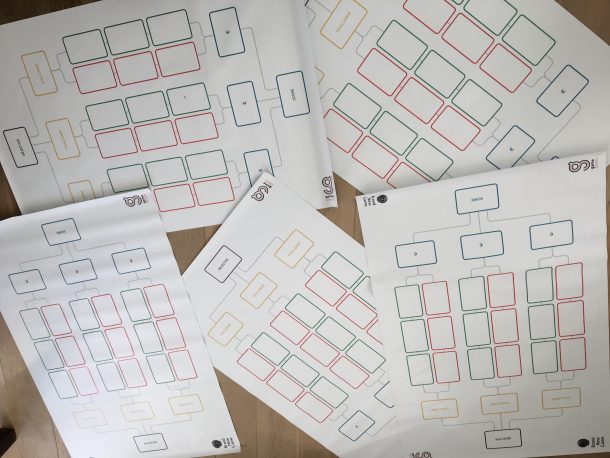
The GameStorm is an ideal method to create actionable plans that contribute to progress within 3 months time. Check out one concrete example here:

Ā Because markets change rapidly and AI continues to transform industries, we recommend revisiting the Purpose Pyramid every (fiscal) quarter, to make sure that what we strive for (our objectives and goals), still helps to secure or enhance our position on the business playground.
Running an organization should be a living system that continuously evolves, depending on the world around us.
Outcome: Organizational alignment, strategic clarity and measurable progress.

Friday the 13th…

Since February 2019 we are working together with a very talented intern called Mitch Wensveen. He decided to do another term with us. He created loads of cool gifs and we are working hard on a promotional trailer about organizational transformation using gamification (or rather, game mechanics). I hereby want to promote him to our network, because he is an excellent designer, illustrator and animator! A combination you seldom find! Level up our game Mitch!

For a gamification platform we areĀ developing, we areĀ creating an avatar store where you can create your character from over 1.000 different items. Varying from skin color, hair style and clothing… If you are interested in using this to engage your employees and create super(s)heroes – let us know!

Do you recognize the character in this gif below? Then comment below or reach out through Twitter @BartHufen #Gamification

Free Demo of Power Play

A free game? Sure! No strings attached? Nope! A freemium model with in-game purchases? Hell no!

Our game Power Play provides a perfect experience to play with a colleague if you wonder how you can use a serious games to:

  1. Address compliance / code of conduct issues
  2. Discuss complex or sensitive situations on the work floor
  3. Give insight in the consequences of peoples actions
  4. Want to bring company values to life
  5. If you love Hearthstone, but are looking for a ‘serious game’ alternative šŸ˜‰

The game is relatively easy, watch this video for a short (5 minute) explanation or read on…

As soon as you register, you can enter the game and start by choosing either an opponent or a ‘file’. A file is a situation you would like to practice. You can experience how your actions will affect the situation at hand. For instance if a colleague is scared to address a certain situation you probably require a certain level of ‘bravery’ to ‘unnerve’ this situation effectively. The game works in turns, so as soon as you start playing for a certain file, you and your opponent receive a set of cards that represent actions. These actions cost a certain amount of energy and have various impact on your company values. In this case these values are 4 key processes that influence the impact of your actions. They are: will-power, knowledge, abilities and guts (bravery). Each turn your energy level grows and you play more actions – that hopefully unnerve the situation before your opponent saves the day…

Just practice together and let us know how your experience was through Twitter @BartHufen #powerplay #gamification.

This product is based on a game we developed for ING Insurance (now called NN Group) which was released in 2015, 2016 and 2017.

Start working 24/7 and be happy!

This is a very personal blog, I hope you appreciate it.Ā 

In 2016 I almost crashed on the highway while driving my Audi TT sports car. That particular morning I already felt weary and dizzy during a meeting, but did not give it much attention at the time. After the meeting, I went for a short walk with a colleague and decided to call my parents if they were able to drive me and my car back home. They said they could, but eventually I decided to drive home myself around noon (stubborn?). As soon as I drove up the highway, It felt like a heavy blanked was pulled over my head and pushed me down… I managed to get off at the next exit – fortunately enough, the route to a hospital. I quickly called my parents from my car at a stop-sign explaining they needed to come a.s.ap. as I thought I was having a brain stroke… I parked my car as quick as I could, managed to get out and shouted to two elderly ladies that I wasn’t doing well… They got me inside the emergency entrance where I was rushed to a bed for further examination. After a series of tests, deposit of blood and pee and even a CT brain-scan a doctor came to me and said: “After all the tests we have done in the past three hours, we see no reason to keep you here…”

Victim of my ambitionsĀ 

I was stunned. What was wrong with me? Nothing? How could that be? I clearly felt bad and almost fainted?! My parents arrived at the hospital and drove me home. While driving, my dad and I discussed what could have let up to this event. The day before, I visited my parents with my partner, telling them she was pregnant. The week earlier I sent the final manuscript of my (Dutch) book ‘Gamification als motor van verandering‘ to my publisher for production. We also just released the second version of one of our biggest international projects. So you could say I completed some ‘epic projects’.

I often say, as a joke, that I am the victim or a slave of my own ambitions and this is very true. As soon as I finished my Masters of Brand Management and started BrandNewGame my ambitions were quite high and I find it hard to be pleased… The people I have worked since I founded BrandNewGame in 2009 either have the same high standards, or don’t work with me anymore. I guess my ambitions helped to be able to work for great brands like Vodafone, Foot Locker Europe and Air France KLM, but it is also a burden to drive yourself towards the ambitious goals I have constantly…

Dare to be non-productive : play!Ā 

I guess for a long time I had not been listening to my own motto: ‘work hard, play hard’. I was only working really hard, although it never felt as working… My work is so much fun that I never perceive it as working (except for writing books and blogs ;-). On the other hand I was playing loads of games as well? I guess we need to add another dimension to work hard, play hard, which is: rest hard… If a day has 24 hours of which we need 6 to sleep, 6 to travel and eat, 6 to work… you still have 6 to have fun or ‘do nothing’… For me this was the moment to call a coach I met 6 months earlier. He coached me during my preparations for my TedXTalkĀ about gamification in 2016. The first few meetings with him I cried a lot. Not because I was sad, but because it frustrated me that other people in the world have a – maybe less fortunate life than I am leading – so how unfair is it for me to complaint that I am not ‘happy ‘..?! I learned that all I needed to do was: stand still more often… better yet: stand still every day! He said: “Why don’t you do the Yoga exercises I taught you every morning and evening and give yourself 10 minutes a day to meditate and do nothing…?” This seemed (and appeared) to be the best advice I ever had.

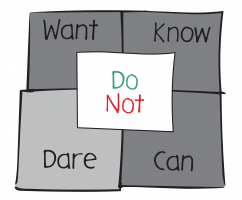
I want, I know, I’m able and I dare!

In my most recent book I came up with a model that unveils the key-processes that determine the effectiveness / impact of your actions. It is the combination of:

I want + know + am able + dare to do what is needed to be done. In this case, I needed to dare to ‘do nothing’ more often… I forgot that as a human being you cannot always be pushing for more and more but need to stand still more often to load your battery. In my country about 1 million people have suffered or are suffering from a burnout… Guess why Yoga is so popular in the past ten years…

So the key message of this very personal blog is to combine being active and passive like yin and yang. If you are active, you can use the power of the combination of want+know+able+dare for 100% power. But you also need to pay attention to: not wanting anything, clearing your mind, doing nothing physically (resting consciously or doing yoga exercises). But I guess I never dared to do that…

Work 24/7

To live a happy life, I advice you to work 24/7 from now on. I mean, work 24 hours a week… This means 6 hours every day, for 4 days in every week… Why is it that a lot of pop-stars (Tim Bergling / Avicii recently) and even very successful business men commit suicide? Because they are the victim of their incredibly large ambitions. Success for them is achieving better, bigger,Ā more epic challenges… But nothing lies after the biggest challenge, except for another bigger challenge you create yourself… It helped us in our evolution to where we are today, but we need to become happy with less ‘more and more’…Ā I challenge you to apply intrinsic happiness and passiveness more often during the day. Define what is ‘success’ for you. Maybe start by working 24/7 from now on so you have time to let the answers come while you meditate and do nothingĀ  šŸ˜‰

Which actions generate exponential growth

During a GameStorm session in 2017 the objective for the session was inspired by the book ‘Bold‘ – which I can highly recommend. The objective that we defined was: “How can organizations create exponential growth?” This is a description of what came out of the session:

The challenges that the team defined for there organization were:

  1. The purpose of our organization is not inspiring (recognizable?)
  2. Lack of focus (no vision, mission or inspiring purpose)
  3. Ill use of the time we have (meetings, chatting, e-mailing)

The actions that were chosen that most likely keep challenge 1 in place were:

  1. Write down a very broad purpose statement with lots of business lingo
  2. We would rather execute work for clients than bother writing down our purpose
  3. Let one department, management (or even one director) write down the purpose statement

The actions that were chosen to overcome the challenge 1 (the purpose is not inspiring), were:

  1. Make your purpose statement visual or create an inspiring movie
  2. We will organize a day during which we will define the purpose together with the whole team
  3. We organize a ‘thank-you’ event each quarter to celebrate succes, the bigger our succes – the bigger the event will be.

The destructive actions that were chosen that most likely keep challenge 2 in place (Lack of focus), were:

  1. Say yes to each new request or opportunity
  2. Create a project team for each new idea
  3. Assign teams to a different project, half-way the project they were working on

The constructive actions that were chosen to overcome the challenge 2, were:

  1. We aim all actions towards the same purpose and manage departments on why & what should be achieved, not how.
  2. I give people time and budget to do training to develop skills they expect to need to achieve the set objective (purpose)
  3. I help the team to celebrate and visualize both their efforts and results on a Kanban-board and review the actions each day

The actions that were chosen that most likely keep challenge 3Ā in place (Ill use of the time we have), were:

  1. Doing other people’s work, because it has to be done
  2. Appreciating and rewarding people that participate in more than 20 (!) projects
  3. We start every week with ‘leaning up’ followed by a daily scrum, a week-meeting and a specialist-session…

The actions that were chosen to overcome the challenge 3, were:

  1. We will give people time and budget to do a time management training (2nd time)
  2. We reduce the work-week to 32 hours (and pay 40) and note the actions that I stop executing.
  3. We will start to observe and measure which tasks are repetitive and will automate or outsource them

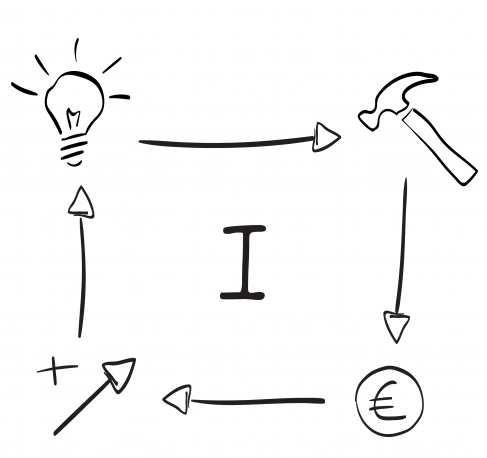
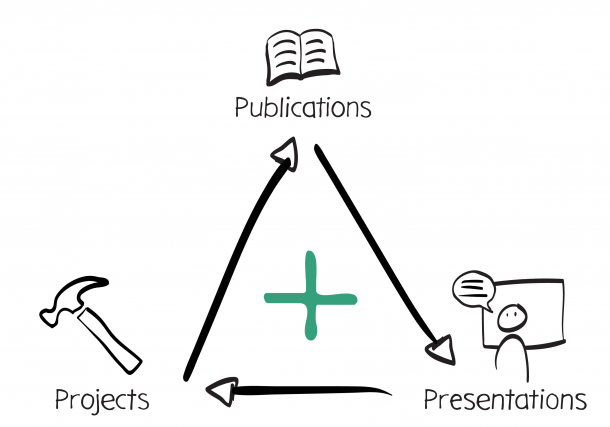
Three of the actions mentioned regarded development or training or employees or reducing ‘work-hours’. Personally I take about 30% of my time to read and write publications and do presentations about what I read or wrote. Forcing myself to read what’s new, innovative or just interesting keeps my mind open to new ways of looking at things. Sharing this knowledge with others gives me both a sense or purpose and fulfillment. And apart from that, presenting the information in my own way enables me to actually ‘master’ what I read or wrote. What inspires me most is reading books or watching documentaries outside of my business (branding / organizational change and gamification). I strongly encourage organizations to facilitate employees in developing new skills, interests and explore usage of their talents in different areas of their business. Why not rotate people from time to time through different departments surrounding different purposes. Let them join meetings they usually would not be in and ask for their non-biased opinion. We can sometimes solve problems faster using actions that lie outside of the area that created those problems. You could rotate people according to the four progressive processes I defined in my latest book; think, make, sell and improve.

As for the reduction of working-time… I plan to work 24/7 from now on; meaning 24 hours per week. In practice this means I leave my house AFTER traffic to drive to work, so I am in the office around 10 o’ clock and leave again around 16:00 hours BEFORE traffic. Effectively I work 6 hours in the office and I do the necessary phone calls in the car. I should mention that I indeed use those 6 hours to focus only on the things that are in my agenda. And I plan and execute like a German (diligently).

On Friday I don’t work, it’s my dad-day. I understand not all companies and jobs can work like this, unless you rotate tasks and occasionally the CEO should pick up the phone or answer some complaints… To my opinion that should be the job of the CEO anyway – collecting feedback to improve the organization as a whole based on a shared vision and purpose using the key-competences and talents of all members.

VR will never become mass-market

Is this a bold statement? I guess it is. The upcoming Christmas period and the year 2018 will prove me right or wrong. Why am I still so sceptic about VR? Because I have been in the games industry since 1999 (on and off) and I have seen a lot of digital products come and go, although whole markets believed it would be ‘the next thing’.

Let me back up my bold statement with some facts…

Fact 1: Alternative user interfaces have a hard time conquering the consumers space.

Take Layar, QR-code readers, Leap motion, PlayStation Move, Xbox Kinect, most of them didn’t become as successful as expected. The main reason being, human beings enjoy tactile feedback. What do I mean by that? The physical component.
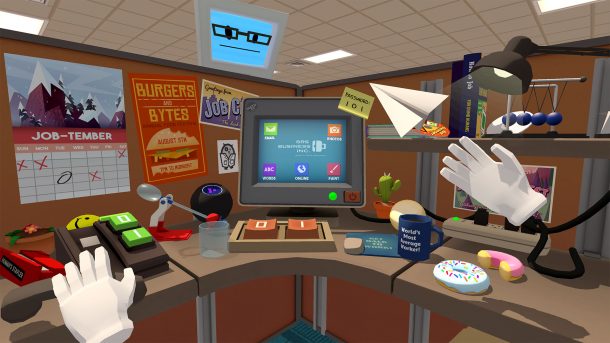
We need to touch and feel what we are doing. Even e-readers have a hard time these days. Why? Maybe because we just love to turn pages of a book and feel we are gradually progressing… Ā Physical books are still outselling digital books and there is a bigger growth in sales these days, even amongst the new generations (x, y and z if you believe in those categories)!

Fact 2:Ā Google Glass was killed as a projectĀ 

First of all the Google glasses looked like crap, and we as human beings are still fools for style. Steve Jobs got that. But even if Google Glasses would look like Armani or Ray-Ban glasses one could argue, whether it would become successful. There is just not enough added value yet using glasses as an extra layer on the real world. Yes, if I would be single and Tinder would create an app showing me extra information on who is available in a club or restaurant that night, maybe matching up with people would work thanks to glasses… But no – I don’t think we will see that in the near future. I am aware that Google re-started investing in Glass, but we’ll see how…

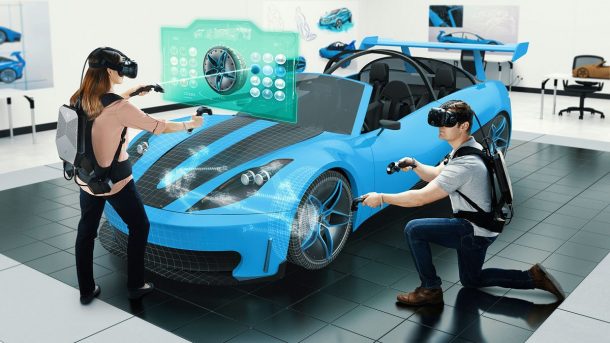
Do I believe Google Glasses and VR could work in specific situations? Yes of course. Using glasses in a training or working environment definitely has potential to become huge. That’s the business I am in! But consumer markets, I don’t think so.
Fact 3: 3D TV never became mass marketĀ 

Do you remember when Sony, LG and Samsung tried to conquer the market with 3D television? Everyone in the TV industry believed that – after HD TV – we needed 3D. But after a few years of disappointing sales, everyone dropped it. Why? Because we will not wear an extra pair of glasses in front of a TV for a meagerly improved experience.

Why do you think contact lenses became so popular? People don’t like to wear glasses!

Fact 4: It is non-social to wear glasses that completely remove you from the real-space.Ā 

Erasing the existing environment by putting on glasses is scary. Yes, you can (only) do it sitting down, but then the only types of games that work are games where you remain seated… Flight simulators, driving / racing in a car, sitting in a train, on a rollercoaster, tied to a chair… But how many game-genres can tie into those situations and remain relevant?

Apart from that, when are you really alone to play a VR game? Basically people that are single and live alone are the main target. Fortunately we are still social human beings, so in the essence no one wants to be alone all the time. Therefore the window of opportunity to remain relevant at all times in the living room is really small….

Only if the sex industry combines high-end footage with physical toys (feedback) that are better than the real-life experience (and prevent you from getting STD’s), I give VR a chance. I know Pornhub is looking into VR, so … who knows… A golden rule when looking at innovations remains: just because it is possible, doesn’t mean it’s better than the current situation or even useful…

When will we know that I am right? Well… PlayStation will aggressively target the market during this X-Mas, and then developers will have maybe a year or two to come up with the ‘killer-app’ or kill-game that will make it worth to invest in VR. Will I buy a VR system myself? Of course, as soon as Red Dead Redemption 2 hits the marketplace, I buy the PS4 and the best VR set imaginable, just to remain up-to-date with things that are happening šŸ˜‰

GameStorm solved problems

Did you know our GameStorm method solves problems? And not only that – it generates actionable ideas that lead to great achievements, executed by the very same professionals that worked on them! How much more engagement do you need than moving people in directions they feel is the right way? We have been experiencing great results since the introduction of the GameStorm in 2011. And the cool part is, we can anonymously share some great ideas on some generic challenges that clients (organizations) might face.

Take employee involvement and training in retail for instance. One of our retail clients described their objective in 2014 as follows: “Implement effective hr tactics in order to have flexible use of our employees”. The challenges that retailers face and various teams defined during the GameStorm session where (amongst others):

  1. Coordination of training during the day time work
  2. Helping other employees to level up their game
  3. Finding the right people for the right positions you have to fill

Now these challenges are not unique. As a matter a fact, we faced the same challenges when I used to work as a Channel Marketing Manager for Diesel. But these days, these challenges have a much bigger impact on your business playground and – in the end – your P&L than in 2010. It’s do or die these days…

(Destructive) Behavior that was chosen and proven to keep these challenges alive are (amongst others):

  • No pep talks [on challenge 1]
  • No relationship with the team matesĀ [on challenge 1]
  • Not taking time to develop people, in other words: rushing the trainingĀ [on challenge 1]

Possibly due to the digital era we live in, even in a store, people do not build up a relation anymore (point 2), neither do they do motivational speeches or ‘pep-talks’ to inspire and stimulate each other. Especially in difficult times it can be highly effective to discuss the elephant in the room, give it a name and cut it in pieces (not literally of course). Because not talking about the elephant in the room will not scare it away – acting up will! And as for the third action: not taking time to develop people, I have a brilliant comment I once read. The CFO says: “What if we develop our employees and they leave our company…?” CEO says: “What if we don’t develop them and they will stay working in our organization?!” If you want to become (or remain) a game changer on your playground these days you have to continuously invest in your human capital. If you don’t you have already lost the battle from online webshops like Ali Baba, Amazon and others. But fortunately for us, the GameStorm also let’s you look on the positive side, defining constructive behavior to overcome the chosen challenges.

Ways to overcome this challenge (Coordination of training during day time work), that were chosen during the GameStorm session were:

  • Use active feedback to improve your training every session over and over again
  • Let your experts (in-store) lead training sessions 1 on 1
  • Write don a game plan for the day or week, within to do’s: who gets his training at what time on which priorities

I cannot stress it enough and I have done that in my most recent book, but there is only 1 way (really just one), to improve over and over again and it is: feedback. The way players learn in games is thanks to feedback. Take the game Pac-Man. You are a yellow guy, eating cookies in a maze. The more cookies you eat, the more points you get (feedback) and the cookies disappear (feedback). If you eat a ‘special’ cooky (inspired by the Dutch I presume), recognizable because of the flickering (feedback), you can eat the ghosts that hunt you. Their colour changes (feedback) as soon as you eat a special cooky. If you kill a ghost, they change into flickering eyes and you see a score (200, 400, 800, 1600 – all feedback)… Need I continue to explain how important feedback is in games? The same goes for real-life… Humans can only improve by giving feedback, but we are really bad at giving motivational feedback. This is why we developed a game for that in 2016 for a big red mobile phone carrier (project to be disclosed soon). What I learned about giving feedback is: be authentic, be critically honest and always end positive with a plan of actions to be taken. For all I care: use the GameStorm structure! In a (really tiny) nutshell: What can we agree upon that you will do in the future, what did you do that did not work (in my opinion), what are you planning on improving in the future (or which suggestions do I have for you), so we can progress…?

A lot of retail organizations are afraid to ‘waste time’ on training, but the people in your store are the only – and I repeat the only – relevant discriminating factor for consumers these days that can persuade us into buying things – apart from great design (which plays with our sub-conscious). It is the people in your store that can make a difference. Not the product, not the price, not the place (location, location, location = web these days – wake up!), nor your promotional (mostly bull shit – and we recognize it) ad-campaign…
It is people and their actions that influence me in buying or leaving. And actually I strongly believe you cannot sell products to people, you have to let people decide to buy…

So don’t book a ticket to our GameStorm Trooper Training, we are not selling this product, you can only buy into it… šŸ˜‰ More information can be found here should you be interested…

Your business model is being disrupted…

Most companies don’t realize it yet, but their business model is being corrupted… disrupted. Competitors come from area’s you would never expect them to come from. Hotels nowadays compete with private homes that are rented out through Air BNB, the taxi industrie compete with people driving people in their privately owned cars. Will energy companies soon loose their business to private energy providers? What can companies and their employees do to stop being a victim of continuous change and the accelerating speed of it…? How can you become a game changer like – for instance – Red Bull was in the nineties? There is a simple five-step program for that, which supports continuous change (or progress as I call it).

It all starts with exploring your current business playground and recognizing the most important (potential) players… Once you know who will play a role on your playground, you can uncover if their influence is growing or declining and whether that is good or bad. What you then do in detail will be explained in our GameStorm Trooper training on 13 & 14 September. The next steps are: determine the…

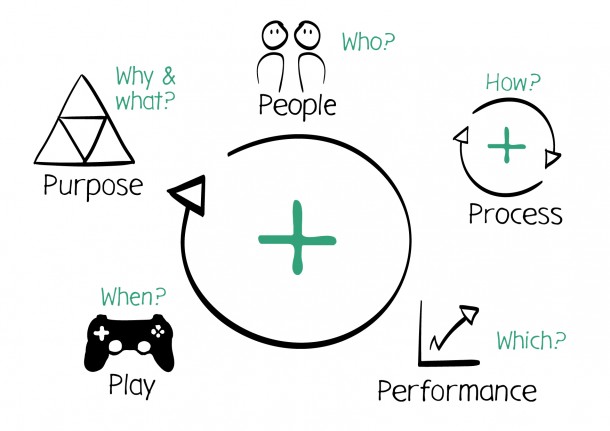
  1. Purpose of the most important players and define how your organization can contribute to that
  2. Players: who are they? And what drives their actions? In other words, what do they want, know, able to and dare to do on the professional playground?
  3. Proces: which key processes determine your progressive growth (or decline) in other words: which actions can lead to synergy regarding your turn-over and costs.
  4. Performance: how well do you do? Versus competitors, versus last years, versus your power?
  5. Play: last but not least: if you underperform as an organization? How can you change the way people work, or actually: how can employees change their way of working?

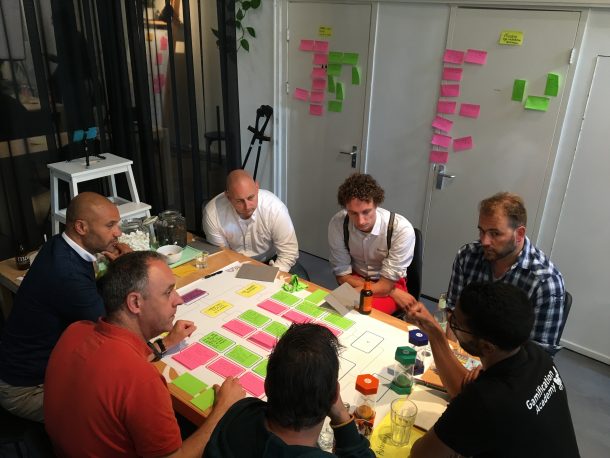
The answer lies in the GameStorm methodology that I developed in 2012, which has been played by over 1.000 professionals since then. It helps companies to support employees to continuous change their routine in a fun and functional manner. Change is inevitable but often perceived as annoying. Therefore we make it fun to start with (and effective in the long run). The GameStorm uses game mechanics that make most games so addictive, like setting a goal, defining obstacles, providing players with dilemma’s (they have to make choices), voting on actions and calculating the impact of their old and new behavior. The GameStorm helped over 100 companies to transform their challenges into change and create perpetual progress by executing it each fiscal quarter. If you want to know how we do this, join the Gamification Academy and get an official certificate and start playing around with problems! More information can be found here.